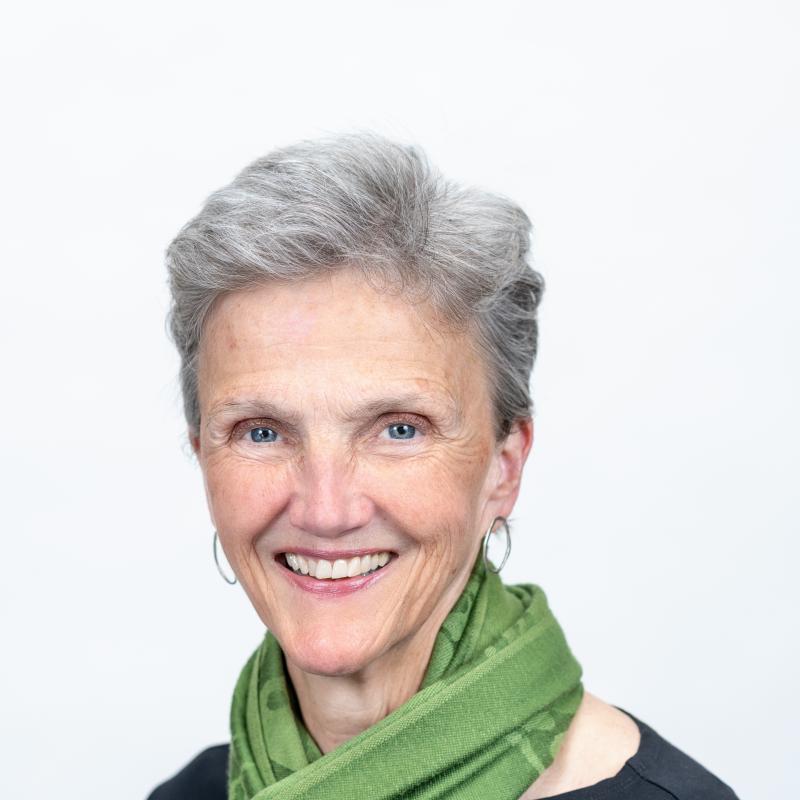
The professional evolution of Laurie J. Peter, M.S.W. ’91, one of this year’s Day-Garrett Award recipients, exemplifies the dynamic nature of social work. Spanning three distinct yet interconnected phases, her multifaceted career demonstrates the breadth of opportunities within the social work profession.
Peter’s career launched with direct clinical practice following her graduation. As a clinical social worker in Oregon and later Colorado, she was embedded within critical care medical environments. Her role as part of a Level I trauma center’s patient care team involved supporting families navigating surgical intensive care situations, often during their most vulnerable moments.
“The work was simultaneously fascinating and challenging,” Peter said. “The fast-paced environment demanded constant vigilance, and the team was supporting people through some of life’s most difficult experiences—including times when their loved ones weren’t going to survive.”

In 2001, Peter relocated to New Jersey and transitioned into nonprofit governance, her second career phase. Her board service spanned multiple organizations addressing diverse social issues: the National AIDS Fund (now AIDS United), Jersey Battered Women Services (now JBWS) and SAGE (sageusa.org), a national organization that provides advocacy and services to LGBTQ+ older adults. She served as board vice chair for DigDeep, an organization tackling water accessibility in underserved American communities, including the Navajo Nation and Appalachian regions.
She currently serves on JBWS’s Leadership Advisory Council and on the AMA Foundation’s (the philanthropic arm of the American Medical Association) Fellowship Commission on LGBTQ+ Health. Peter described this work as addressing fundamental equity issues rooted in structural racism and systemic marginalization.
“Through DigDeep, I witnessed transformative change in water equity,” she explained. “My involvement began early in the organization’s development, as I helped scale the organization through board development and extensive fundraising initiatives.”

Peter firmly rejects the notion that board service represents a departure from social work practice. Instead, she views it as an alternative application of social work principles. She cited examples of developing strategic plans, identifying service gaps, and creating new departments—all of which resulted in improved client outcomes and systemic change.
“Board membership provides opportunities to influence policy and have systemic impact,” she noted. “You’re practicing social work through a different lens, but the core mission remains unchanged.”
Now in the third phase of her career, Peter has returned to clinical work through private practice, using virtual platforms to serve clients. This transition required additional certification in cognitive behavioral therapy (CBT), dialectical behavior therapy (DBT), psychodynamic approaches and trauma-informed care.
The Day-Garrett Award, established in 1978 and named for Florence Day and Annette Garrett, pays tribute to a distinguished alum whose lifelong dedication and accomplishments have left an indelible mark on the profession of social work.
Her current clinical approach integrates insights gained through decades on the front line of death and dying, as a leader steering social service nonprofits and from her private practice.

At 60-plus, Peter brings seasoned wisdom to the latter, focusing on building client resilience rather than attempting to “save the world,” as she put it, a perspective that she believes comes with professional maturity.
Through each phase of her career, Peter believes, her Smith SSW education has been foundational. Her path to Smith began in a public library, where, in the pre-Internet era, she researched clinical social work programs.
SSW’s program had several key strengths that shaped her career, she said, including clinical and academic excellence, a comprehensive social policy education, and a strong commitment to social justice. Peter also valued the student community and faculty relationships that created lasting professional networks and friendships.
“The connections I formed at SSW have endured through my career, and the experience was genuinely enjoyable,” she said.
The Day-Garrett Award recognizes Peter as “a source of inspiration for future generations.” She hopes her career trajectory encourages emerging social workers to embrace the profession’s flexibility and its capacity for adaptation and growth.
“There’s no prescribed path in social work,” Peter emphasized. “The profession is continuously evolving, offering multiple avenues for fulfillment, meaningful impact and expression of its core values and mission. You can transition between roles, combine different approaches, reinvent your practice, and discover new ways to create change throughout your entire career.” ◆