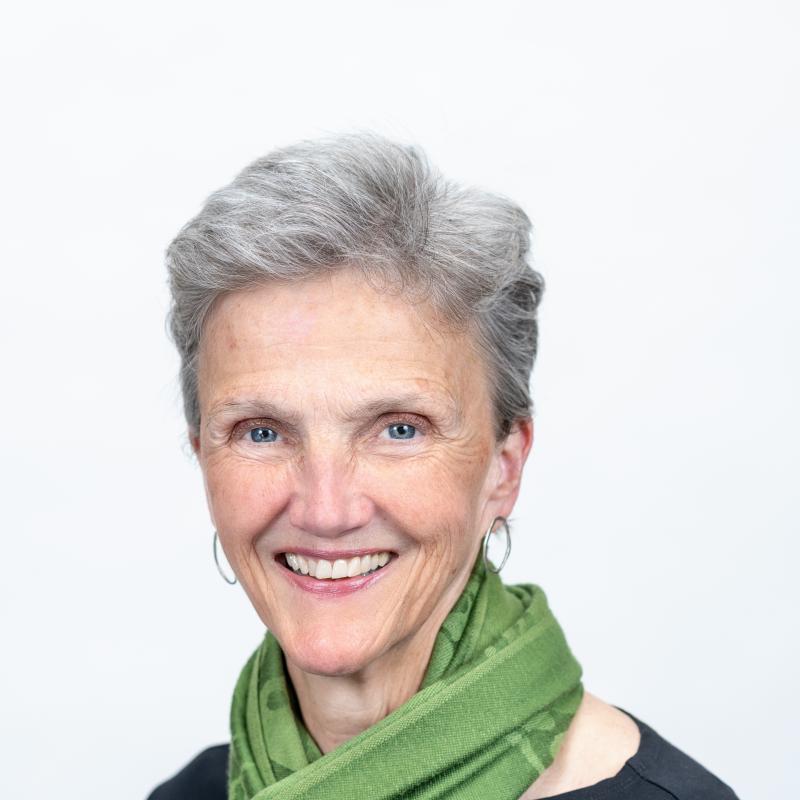
The nation was a vastly different place in 2014, the summer when Marianne Yoshioka first became dean of the Smith College School for Social Work. COVID-19 had not yet reshaped years of reality. George Floyd was alive in Minneapolis. Barack Obama was president.
Shortly after taking the helm, though, an avalanche of unprecedented events began, from pandemics to racial justice reckonings to rapidly shifting industry norms. And when it did, it inevitably impacted an institution full of attuned students training for a social justice oriented helping profession.
“So much has happened,” said Yoshioka, who announced earlier this year that she is retiring from the role at the end of June 2026. “When I first came [to Smith], I don’t think I had any understanding of the situation I was walking into, which was that there were many great things about this School and this community but there was change poised to happen. This change would have happened regardless of who was the dean,” she said, but “there were things that I triggered in particular, maybe unwittingly, then there was the crash of time, of external events.”

As she, colleagues, and mentees survey her time leading SSW, one theme rises to the top: Yoshioka has spent her time in the role listening closely to guide collaborative change, shifting the School and its curricula toward a more equitable future. She has shepherded in a faculty sea change—they are now majority scholars of color—as well as an inclusive School culture, racial justice-focused guiding principles, and a larger research focus.
“We are still deep in this cultural transformation,” she said. “It felt, when I first got here, like we as an institution—as a group of people—that we had gotten a little stuck, unsure of how to respond to the evolving world and demands on us as a school for social work and our history. History is really important at Smith. The key was how to let loose just enough to let us move without unravelling and negating all that came before.”

She did all this, according to Professor Emeritus Josh Miller, M.S.W., Ph.D., with a quiet-but-strong leadership style.
“She was really very fair and evenhanded,” said Miller, who was associate dean at the start of Yoshioka’s tenure.
Sarah Yang Mumma, Ph.D. ’23, who has taught at SSW and, before that, was Yoshioka’s dissertation advisee, agreed.
“She has the ability to see what needs to be done, to move things in that direction, and to hold the complexity of situations. I find her to be a very inspirational leader, very real, personable, and kind,” she said.
Yoshioka was recruited to the SSW after eight years as academic dean at Columbia University’s School of Social Work, following a decade on the faculty where her work focused on studying domestic violence among Asian Americans. Before that, she earned her doctorate in social work at Florida State University, where she worked with women at risk of contracting HIV. Yoshioka earned her M.S.W. from the University of Michigan.
“I was looking for a change,” she said. “To be in academia for the long haul, you need to reinvent your circumstances periodically to stay fresh—you have to keep growing and learning.” detail-oriented, with a wide portfolio of responsibilities. Her purview there prepared her better than she anticipated to become the kind of leader she wished to be at Smith.
When Miller and former Associate Dean Irene Rodríguez-M, Ed.D., invited her for coffee during the Council on Social Work Education conference in 2013, she was not initially sure about transitioning from a large urban school to a small one in the wilds of Western Massachusetts. But the more she mulled it over, the better the idea seemed.

“What really seemed to stick with her more than anything was the School’s anti-racism commitment, and she has often said since then that had a lot to do with her applying for the job,” Miller said.
“It’s critical,” she said, “to lead with integrity: to stay grounded in your values, to be transparent about what is possible and what isn’t, and to hold space for both truth-telling and relationship-building.”
“It got me excited for the challenge of it,” Yoshioka added. “I struggled with imposter syndrome—worries of ‘Could I?’ but I decided I would go for it.”
Anti-Racism and Accountability
Her academic deanship at Columbia required her to be procedurally- and detail-oriented, with a wide portfolio of responsibilities. Her purview there prepared her better than she anticipated to be become the kind of leader she wished to be at Smith.
"It's critical," she said, "to lead with integrity: to stay grounded in your values, to be transparent about what is possible and what isn't, and to hold space for both truth-telling and relationship-building."

The largest overarching shift Yoshioka oversaw while leading SSW was the creation and rollout of the School’s five Core Principles. Unveiled in 2020 after a multi-year, multi-constituent planning process, the Core Principles were created in response to consistent feedback that the School’s original anti-racism commitment, dating back to 1995, was inadequate for the present moment. The updated Principles emphasize intentional action, accountability, repair, and centering community members from historically marginalized populations.
“The work of getting to there was shaped by these broader principles of collective endeavor, authenticity, space for people to be their full selves and to retreat if necessary,” said Smith College English Professor Michael Thurston. As College provost from 2019 to 2024, Thurston and Yoshioka met regularly, giving him a front row perspective on her leadership and thought processes. She aimed to ensure, he said, that the School created a deep culture change, not just “a topdown, technocratic fix.”
Accordingly, under Yoshioka’s guidance, an acronym-rich collection of committees labored, collectively, to align the School’s actions and offerings with the Principles, arranging offerings from anti-racism learning opportunities run by outside consultants to rolling out a set of community agreements, which guide how to handle relational ruptures.

It’s “an evolving document that calls on each member of our campus to take responsibility for their actions and words, to make room for others, and to center care in our relationships,” Yoshioka said. “It asks us not to cancel one another in moments of disagreement, but to stay in conversation and hold space for accountability and connection.”
In the years since the debut of the five Core Principles and Community Agreement, Yoshioka has noticed an increasingly inclusive campus community. “[A] culture change is taking hold based on the tenets of our Community Agreement, which encourages listening, learning, and developing accountability for our words, actions, policies, and procedures,” she wrote in an update in late 2024. “The empathy and self-reflection required by the Community Agreement is helping people who spend time on campus feel more ease and generosity with one another.”

Faculty Overhaul And Curriculum Reform
Yoshioka’s commitment to anti-racism and inclusivity has extended to reforms in areas formerly considered sacrosanct: faculty and curricula.
She has overseen a shift from a majority-white to a majority-BIPOC faculty by prioritizing diversity in hiring and helping create policies aiming to repair historical inequities. These include adjusting faculty workload requirements to recognize the disproportionate mentoring load often shouldered by BIPOC professors and doing away with the residency requirement that required faculty to live locally.
“She completely rebuilt the faculty in a way that included the faculty,” Miller said, calling it an “enduring commitment to values that she just would not compromise on.” The shifts have meant that students are able to seek mentorship from faculty whose lived experience—in terms of both race and geography—better reflect their own.
“Marianne happens to be the second dean of color in a row,” said Yvette Colón M.S.W. ’90, Ph.D., a member of the Alumni Leadership Council who won the School’s Day-Garrett Award in 2024 for her leadership in oncology and palliative social work. “I think that was really meaningful for the School, because we had two people who really understood the importance of psychodynamic theory but from lived experience, from work experience, and were much more grounded in how we can all use psychodynamic theory to challenge colonialized mental health.”

This valuable lived experience was also reflected in the type of work Yoshioka has championed. She helped Yang Mumma hone and sharpen her dissertation on how multiracial therapists navigate identity within the context of their clinical work.
“It was so powerful for me to have her see the value of that research. She spoke about how there’s so many mixed students who would really benefit from having this area of research explored,” Yang Mumma said.
In addition to a positionality that sought to incorporate anti-racist principles into both faculty workloads and scholarly work, Yoshioka’s leadership also allowed for movement on the formerly intractable issue of incorporating more research into the School’s curriculum. Psychodynamic theory has always been SSW’s grounding clinical lens, a practice traceable back to the discipline’s foundational Freudian theories. There are deep disagreements in the profession over the efficacy of psychodynamic theory both inherently—it was forged from a white, male, 20th century worldview— and in opposition to more mechanistic modalities.
But generations of students have attended Smith for its psychodynamic emphasis, creating generations of alumni who want to make sure that the School does not back away from its commitment to psychodynamic clinical practice.
“The themes of the conversation have been a fear of letting go of the curriculum that really is unique and meaningful in this world, coupled with the challenge to train students to work in contemporary practice,” Colón said.
Yoshioka has been clear about the School’s commitment to its roots—she has proposed a D.S.W. that would prepare graduates for leadership in psychodynamic-oriented clinical practice, supervision, and education— while also pushing to position students as competitively as possible in the contemporary social work milieu. To that end, the School has honed its research graduation requirements and restructured the Ph.D.

“What sets us apart is that we’ve stayed steady in our convictions,” Yoshioka said. “Amid rapid changes, we’ve continued to prepare students exceptionally well, balancing rigorous clinical training with deep attention to social justice, ethical practice, and the relational foundations of our work.”
Leading Through Covid
As Yoshioka worked toward her larger picture goals for the School, COVID-19 descended.
“The School had to move extremely quickly,” Miller said, both transitioning academic and internship placements from in-person to digital and juggling the less glamorous aspects of the moment, like interfacing with tech employees and accreditation officials. “I think she did a great job, and she supported the creativity of other people…. She always kept the College informed and she kept faculty informed about what the College wanted and what the College was doing.”
Then, after two remote summers, Yoshioka oversaw the transition back to in-person learning. There were masking and testing rules, an emphasis on outdoor activities, and a need to orient a cohort of students who had never set foot on campus into a shifting community culture.

“These moments often brought heightened anxiety and, at times, feelings of chaos,” Yoshioka reflected. “What I’ve learned, and tried to model in my leadership, is the importance of always coming back to community.”
“These were high-stakes moments,” she continued, “the kind that test not just leadership but the integrity of an entire institution. And while we didn’t always come together right away, we ultimately did—and we emerged stronger for it.” ◆