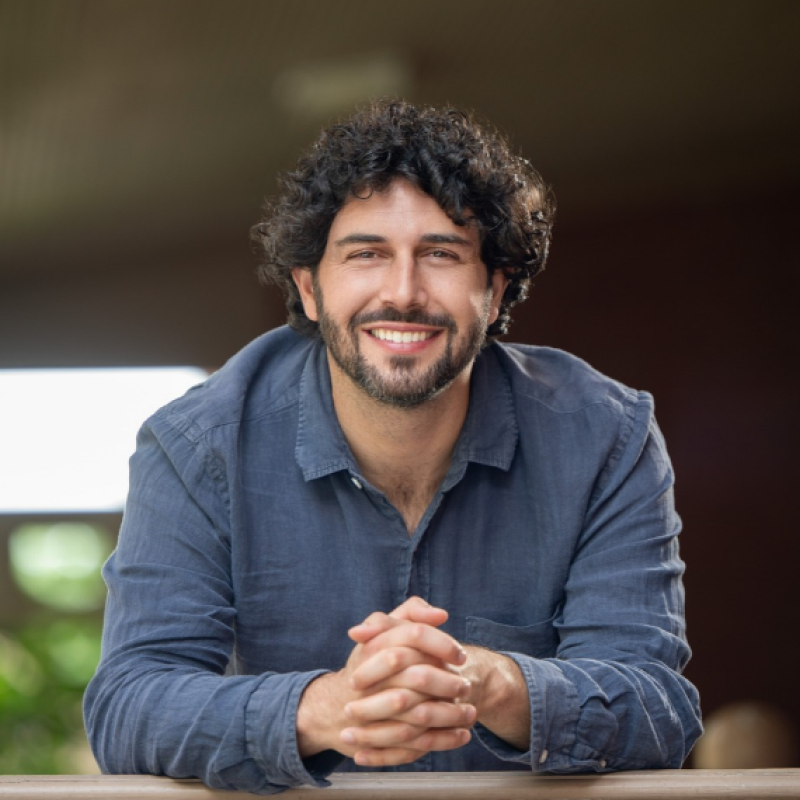
William Teresa, M.S.W. ’26, has always sought work that puts human connection at its core.
“I was always interested in people,” he said, “and why they do the things they do.” That interest was ingrained in the Santa Monica, CA, native from childhood, where he was exposed to the tenets of psychoanalytic psychotherapy by both his maternal grandmother, a psychiatrist, and his father, a licensed marriage and family therapist. In that sense, matriculating at Smith School for Social Work 11 years after completing his undergraduate psychology degree was, in some sense, a homecoming.
“I took a winding path to social work,” said Teresa. He worked in hospitality and film location scouting after college before matriculating at Harvard Divinity School, planning on a course of academic study but ultimately graduating with a chaplaincy degree.
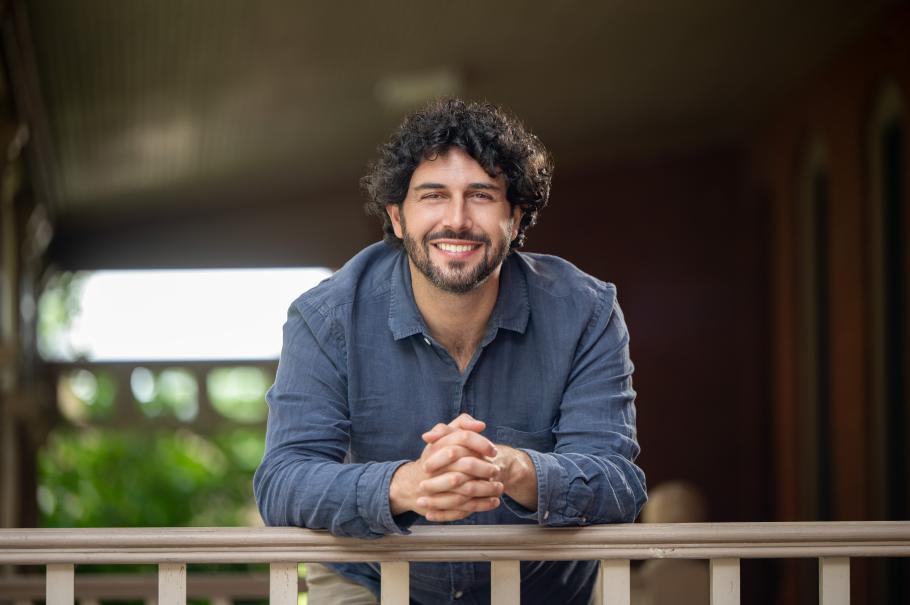
“I specifically chose a program that was interfaith and focused on religious pluralism,” he said. While earning his degree, he did spiritual care and counseling work at Dana-Farber Cancer Center and at Fellside, a transitional living facility in Greater Boston that is a part of Gould Farm, a residential therapeutic community based in Western Massachusetts. At Gould Farm, he came across SSW interns, who were likewise engaged in meaningful therapeutic work.
Then, just as Teresa graduated from divinity school–in 2020, alas–the world shut down, pausing the sorts of programs he needed to complete his certification as a chaplain. After a few years working on interview research for a Black history archive, he decided to pursue a career as a psychotherapist.
“The throughline, when I look back at ‘how did I end up here,’ is storytelling and people’s histories–their personal lives, how they narrate and see their communities,” he said.
“The throughline, when I look back at ‘how did I end up here,’ is storytelling and people’s histories–their personal lives, how they narrate and see their communities."
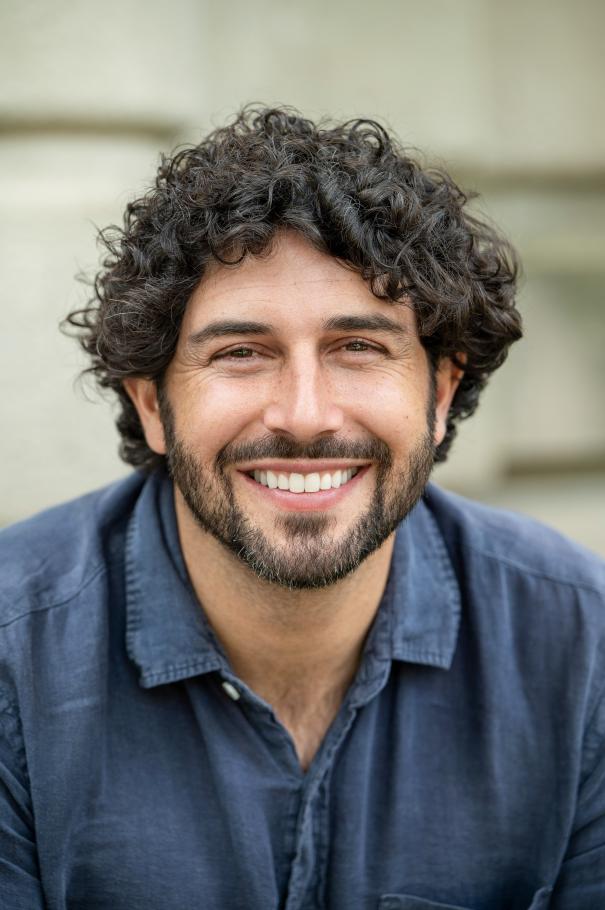
At Smith SSW, which he picked for its reputation for having a psychodynamic focus, for its commitment to social justice values, and for its unique schedule structure, Teresa enjoyed his internship experiences and the classmates he grew close to during on-campus summer terms.
His first-year internship was at the Edinburg Center, a community mental health agency in Bedford, MA, where he worked as part of the Program for Assertive Community Treatment (PACT) team. He did a combination of community-based therapy and case management for high-needs clients living with serious mental health conditions in the area. For his second year, Teresa headed west to join his partner in California, where he interned at a youth health center situated on a public school campus in Culver City. There, he did short-term therapy with and ran a group on relational dynamics for adolescents.
Now, he is beginning the next chapter of his career in clinical social work, which he hopes will include a wide range of clients integrating psychodynamic theory with social work values. It’s a practice lens he honed through SSW course electives looking at psychoanalysis through the lenses of anti-racism and decoloniality.
“I found the readings to be really cutting edge and helpful,” he said. “I wish I could stay and take more classes. Some part of me would love to do this every summer.”
Besides the coursework, Teresa says his pull to extend the SSW experience also hinges on the community he found there: he describes his fellow students as the greatest gift from his specific moment in time at the School.
“I’ve learned so much from my peers. They’re some of the most intelligent, attuned, supportive, hilarious, thoughtful people I've ever met,” he said. “They’re always pressing for the change that’s needed at all different levels.”