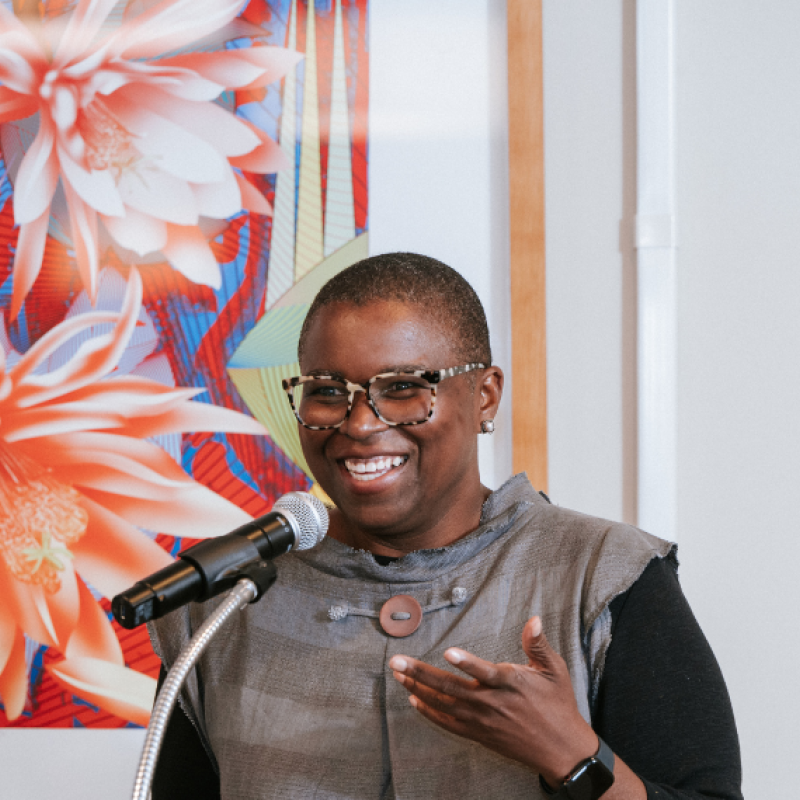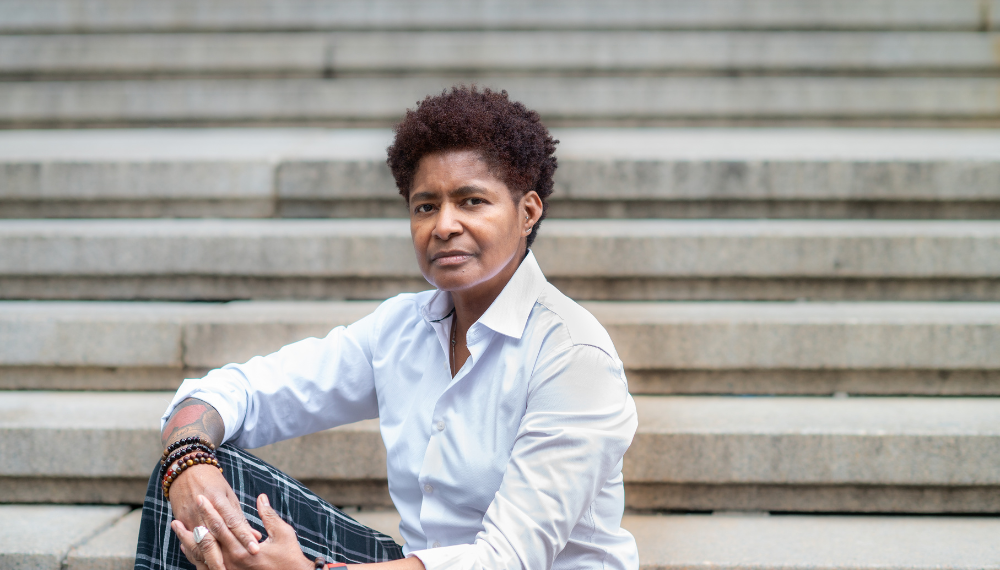
JD Fuller, M.S.W. ’99 has been deeply dedicated to social work from an early age. A psychotherapist, mental health coach, and consultant in private practice for 33 years, she has also been a psychiatric social worker and an outpatient therapist for agencies contracting with the Los Angeles Department of Mental Health; an administrator in nonprofits serving children at risk, people with disabilities, dual-diagnosed veterans and the unhoused population; and worked as a clinician in private schools. At Antioch University Los Angeles, and the New Center of Psychoanalysis, she has taught graduate-level courses in areas such as LGBTQIA+ affirmative psychology, multicultural counseling, and decolonizing mental health. Helping children has been especially important to her throughout her career, “giving them something I didn’t get as a child.” Now she can add Day-Garrett Award recipient to her long list of accomplishments.
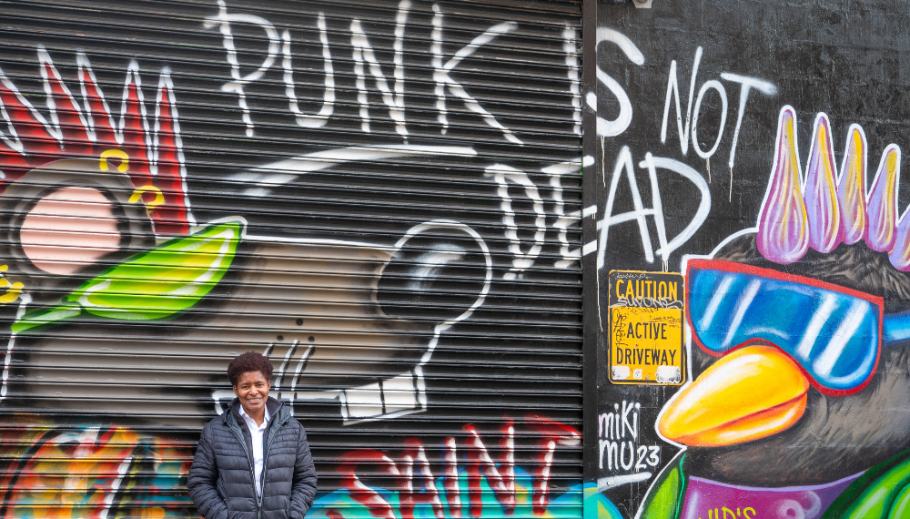
The Day-Garrett Award honors alums who “have made an indelible mark on the profession.” Fuller has made a special kind of indelible mark on social work via a very contemporary medium: the podcast. From 2021 to 2024, she hosted Changing the Narrative with JD Fuller, interviewing guests on such diverse topics as aging, depression, addiction, decolonization, racism, art and activism, hip-hop, and historical trauma. (The 144 episodes are available on YouTube and other digital services.)
“It was so important to me,” she said, “to have conversations, to raise questions, and to create an environment for people to tell their stories, tell their truth.”
In those virtual interviews, and in person, Fuller is fully engaged, bringing intellect, warmth, conviction, civility, and a great sense of humor to the conversation. Her ability to engage, so essential to social work, is all the more remarkable given her childhood. “I was the youngest of nine—the least of all. I never had one teacher, one person in my life who saw me. I saw a lot; I was not asked a lot. I was riddled with anxiety and acted out. But I have high emotional intelligence, and that carried me.”
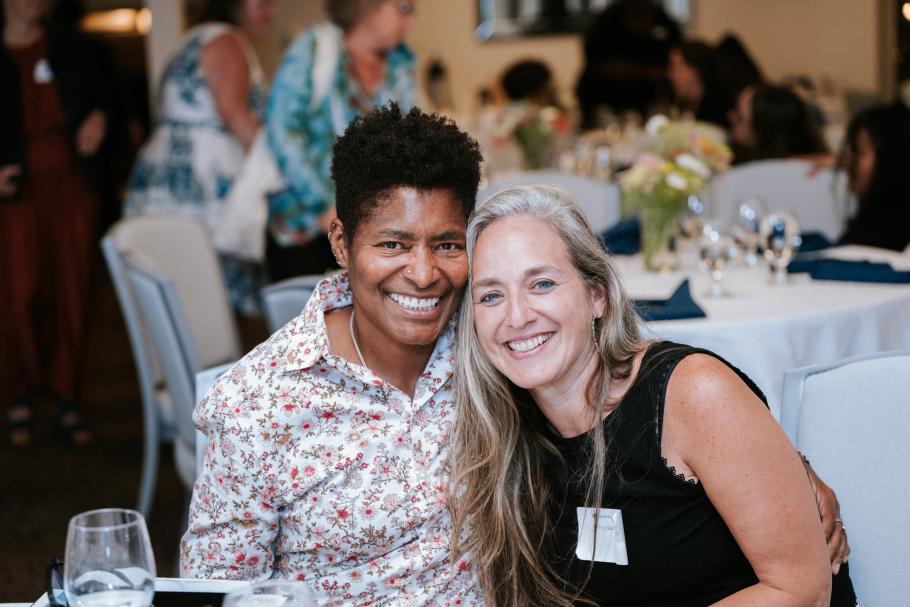
Childhood trauma makes some turn inward. “It made me curious,” said Fuller. At age 20, her curiosity led her to take her first step toward becoming her “essential self,” finding “her truest voice”: “I looked in the yellow pages—remember them?—and found a therapist.”
At age 36, Fuller started at Smith SSW. “My experience there was really formative. I discovered my racial identity. I hadn’t known how important that was—my family was not Afrocentric.” That personal discovery led to her researching and writing her thesis “The Racial Identity Development of the African American Female.”
She also became an activist. “In fact, when I learned about the award,” she said wryly, “I wondered, ‘Do they know I was one of the leaders of a walkout?’” More seriously, Fuller noted, “I have been fighting systems my whole life, but at Smith I realized how important intentionality and strategy are in fighting systems.”
“That is the first order of business,” Fuller believes. “It’s a fallacy that there is any place for marginalized people in this system. It was built by us but not intended for us. My work is about empowering people. In my classes, I teach people to approach social work practice through a decolonial lens.”
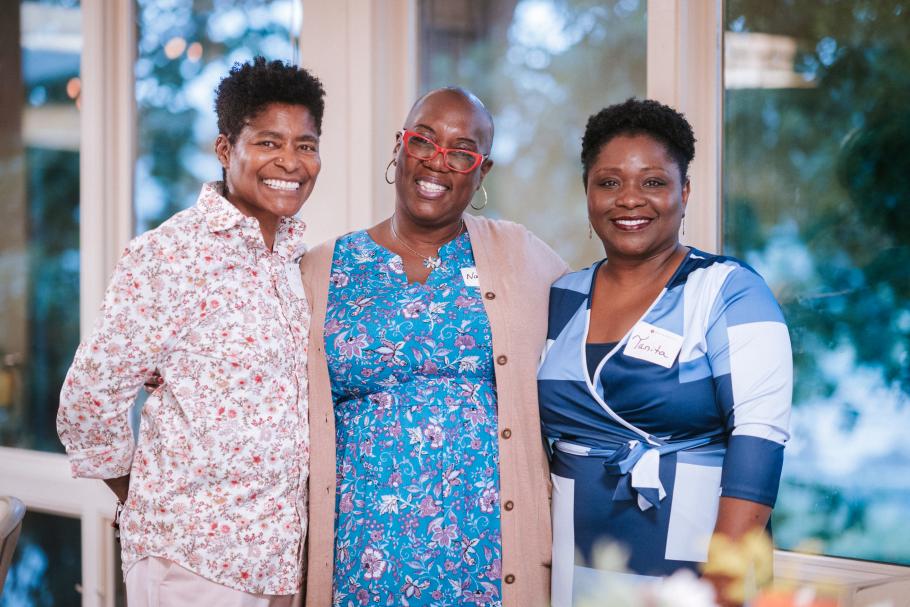
The Day-Garrett Award, established in 1978 and named for Florence Day and Annette Garrett, pays tribute to a distinguished alum whose lifelong dedication and accomplishments have left an indelible mark on the profession of social work.
“Why aren’t we speaking out? We must be true to our profession. Silence equals collusion and in most cases, death. This is a moment when we should all be activists, ideally abolitionists, each in our own way.”
Reflecting on psychiatry’s Eurocentric origins, she added, “I can respect the theories, but I resent so much of them being centered on whiteness, and I feel bound to challenge them. They’re not universal, not true across the racial and cultural spectrum, and it’s problematic not to see that.” In practice, she said, “It’s unethical to treat people if you don’t believe in the existence of structural racism and white supremacist ideology. I approach my own practice from a cross-cultural, multicultural perspective.”
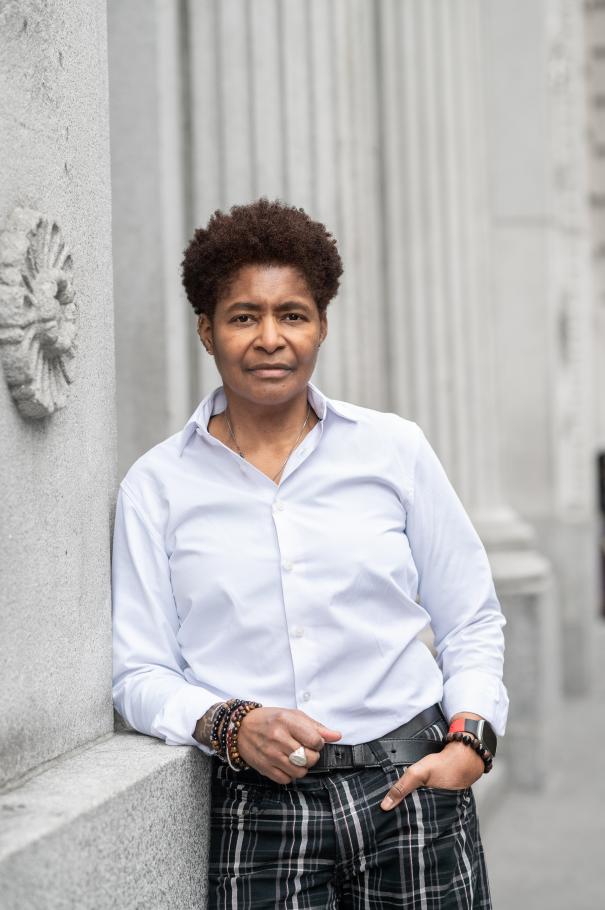
Fuller is disappointed that social work associations haven’t responded to the current political climate. “Why aren’t we speaking out? We must be true to our profession. Silence equals collusion and in most cases, death. This is a moment when we should all be activists, ideally abolitionists, each in our own way.”
Her way these days is sharing information and supporting causes she believes in through social media. Like her podcasts, her posts convey her sense of urgency and draw from many sources, from The Humanity Archive to Sesame Street.
“It’s unethical to treat people if you don’t believe in the existence of structural racism and white supremacist ideology. I approach my own practice from a cross-cultural, multicultural perspective.”
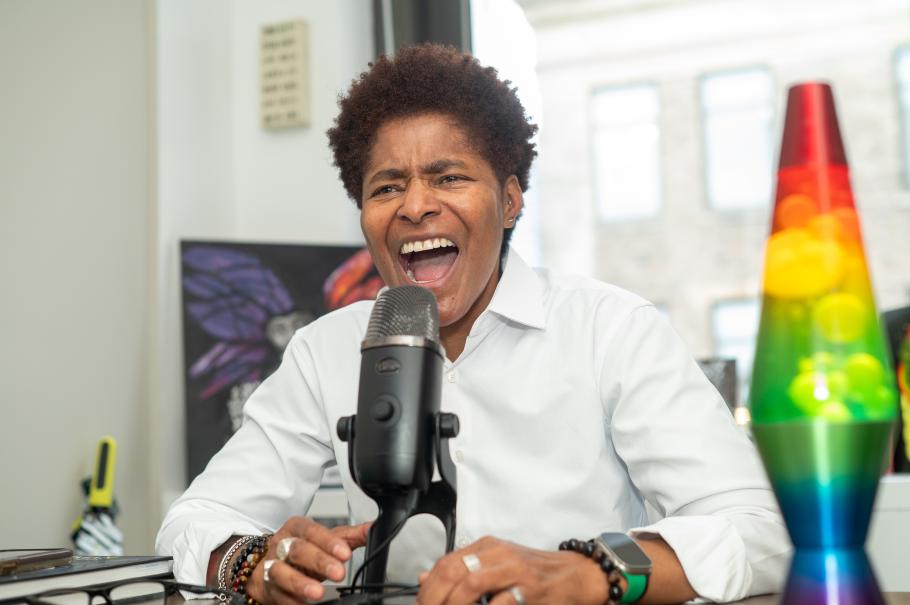
Last year, about to turn 65, Fuller decided to scale back professionally. “I was getting up at 5:15 a.m., working out, then teaching, working in private practice and on my podcast till 10 or 11 p.m. Now I’m concentrating on my private practice, teaching, and activism. Taking care of myself. It’s my own version of being an elder. I’ve also designated this ‘the Year of Yes’— whatever is being offered, I’m taking.”
And still giving her all to what she considers her most important labor: decolonizing social work and helping kids. She is using “her truest voice and using it unapologetically.” ◆