As a child watching the beloved PBS kids’ show Mr. Rogers’ Neighborhood, Lucy Haney ’26 took to heart the advice of its wise host: In scary times, “look for the helpers.” She and her fellow SSW students, she believes, “have come to the helper school.”
“I’ve wanted to be a therapist at least since high school,” Haney said. “People in the healing professions—therapists, counselors, doctors, nurses, priests, pastors, undertakers—their work sets them apart. They’re confronting life every day. I’m enchanted by the idea of that.”
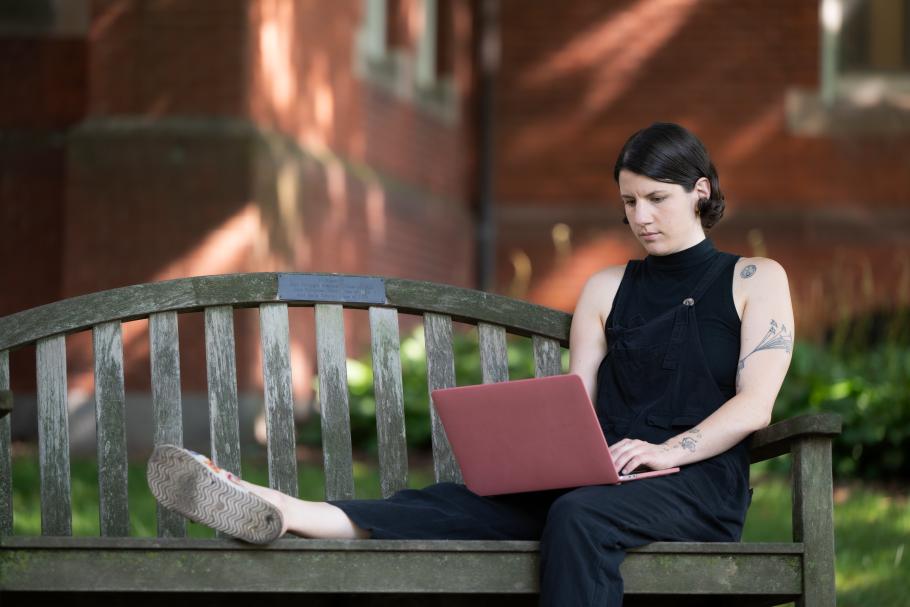
Haney is autistic and has been in therapy off and on since she was seven years old. “School was tough, but I loved the environment my therapists were able to create, a holding container for me, a place for being myself.”
“In college,” she said, “I had a lot of interests, tried out a lot of things in quick succession—I changed my major four times.” A new therapist, she said, “reintroduced” her to the idea of becoming a therapist, and she graduated from the University of Vermont in 2020 with a degree in psychology. After college, she worked as a substitute teacher, a youth-program assistant at a teen center, an after-school coordinator—and a sketch comedian. (Haney has performed in clubs and on podcasts.) “Then I decided, ‘It’s time to go back to school,’” she said.
“We’re decades behind in understanding autism. My mission is to provide more neuro-affirming care. Neurodivergent folks need understanding, to be with people who get it.”
Her first SSW placement built on her background working in schools and with kids. She described being a therapist intern in a Washington, DC, elementary school as “wonderful and illuminating.”
Her current placement is at the Hope Center for Wellness, also in DC, a private practice providing multicultural and bilingual mental-health services. Hope’s founder and director, Cheryl Aguilar M.S.W., LICSW, recently received her Ph.D. from Smith SSW. As the center’s lead therapist, Aguilar treats a wide range of mental health issues but specializes in providing therapy to immigrants and refugees, work for which she has received national recognition.
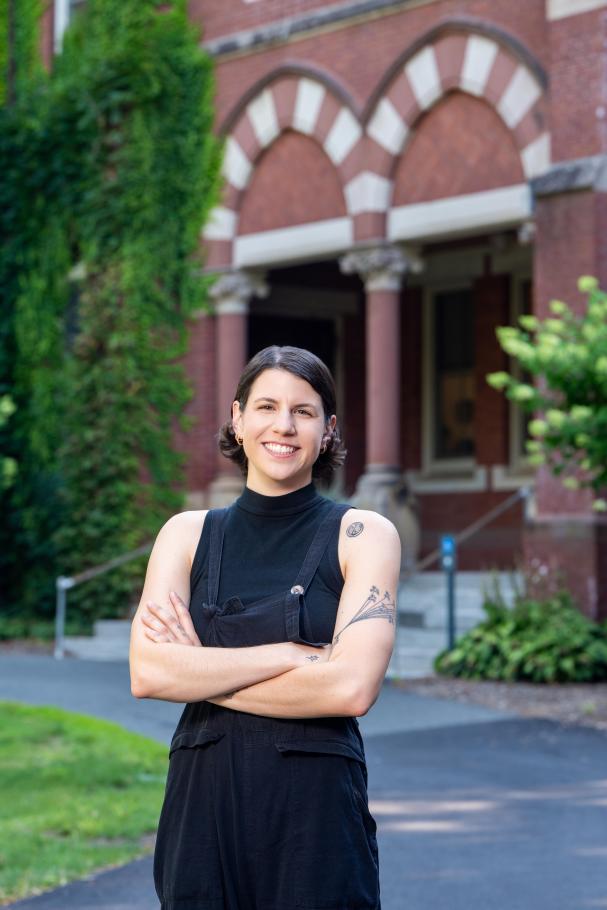
Haney began her practicum at Hope shadowing clinicians, receiving training in therapeutic interventions, even doing social media posts. After about a month, she began seeing youth and adults as clients.
“I love working with neurodivergent kids, autistic students,” said Haney. “It’s fun but also frustrating navigating antiquated systems that do not promote the wellbeing of the youth—it can be retriggering to witness the impact on them. Sometimes it’s hard to stay regulated while navigating these systems. But there’s a lack of social workers available to work with autistic youth, and autistic adults get no support to speak of.” She noted that several studies suggest autistic adults tend to have a much higher rate of unemployment than the general population. “I’m lucky in my particularities,” she said. “I’m able to be gainfully employed offering the kind of help I wish I’d received in public school.”
“We’re decades behind in understanding autism,” she added. “My mission is to provide more neuro-affirming care. Neurodivergent folks need understanding, to be with people who get it.”
Speaking of people who get it, Haney praised her SSW peers, and the school in general. “I can’t recommend SSW enough. I’ve been able to meet and spend lots of time, intentional and deep time, with people I’ll be close to the rest of my life. Not everybody gets to meet twenty of their BFFs all at once.”
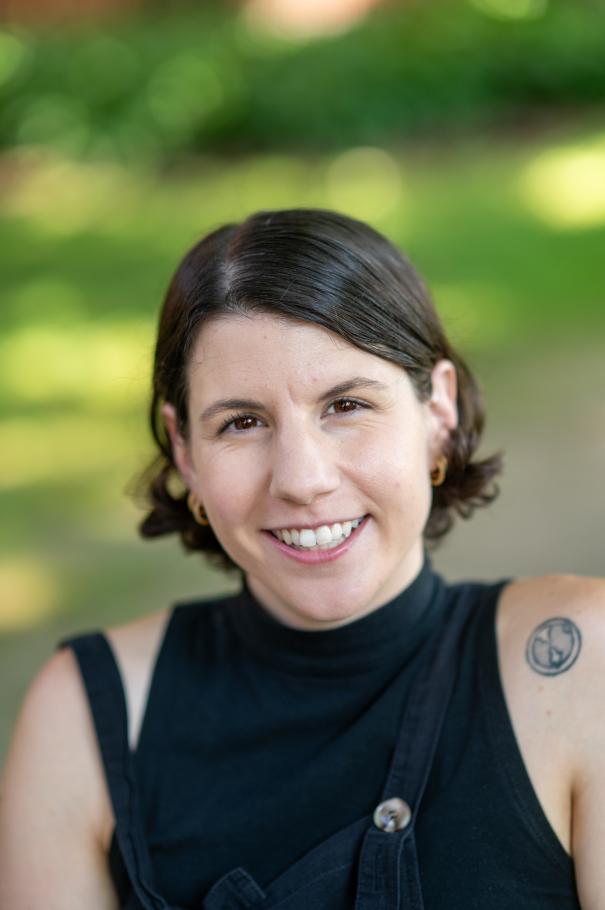
Haney talked about how at SSW, people of many different backgrounds are brought together and how essential authenticity is in such an environment. Haney herself grew up in a small Vermont city, a place she described as “sheltered, privileged” in some ways: “thirty years behind in terms of consumerism,” and having an abundance of “fresh air, good food, and natural beauty.” There were challenging moments in classes for her, and for her classmates: “It wasn’t all sunshine. There was tension, questioning, confusion, conflict.”
Haney sees being in a sometimes emotionally charged setting as a positive thing, if you’re willing, she said, “to reveal your ignorance, be vulnerable in ways you didn’t expect. That is the meat of the program, providing a safe space to investigate and interrogate biases, the culture, and to speak about the big elephant in the room: white supremacy. Everybody’s pushing to find answers, looking for ways to change systems—in a minute amount of time—and it’s stressful showing up for that, not getting everything right.”
But, she added, “It’s the path I want to be on, even when you have to ‘do it messy.’ And I want to give a shout-out to my peers: Keep doing it.”