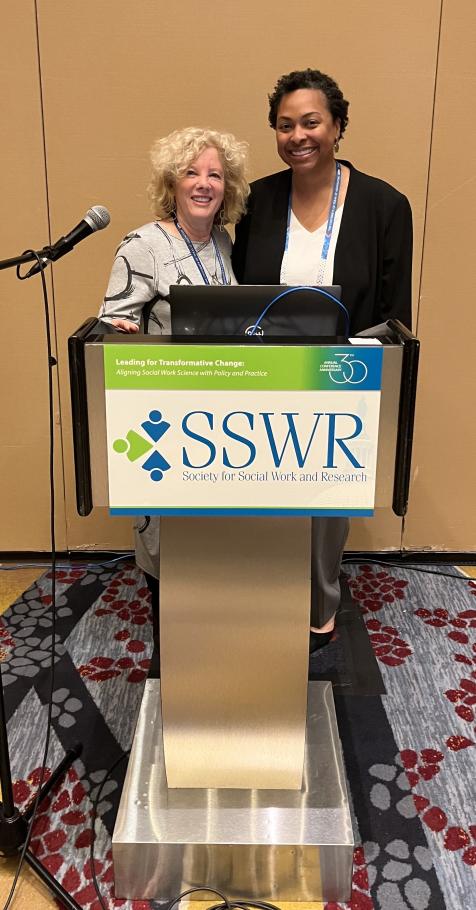
The Society for Social Work Research (SSWR) annual conference brings together a diverse array of the latest social work research across disciplines, from advanced research methodologies, to child welfare, from mental health to substance use disorder. Held January 14-18, 2026 in Washington DC, there were over 500 presentations, and the conference included workshops to improve research methods and grant-writing skills as well as special sessions on vital social work research topics.
This year, the conference topic was “Leading for Transformative Change: Aligning Social Work Science with Policy and Practice.” SSW presenters supported this focus with their evidence-based and actionable research findings on the mental health of parents in two contexts: Central American parents experiencing separation from their children, and quality of coparenting relationships in low-income families.
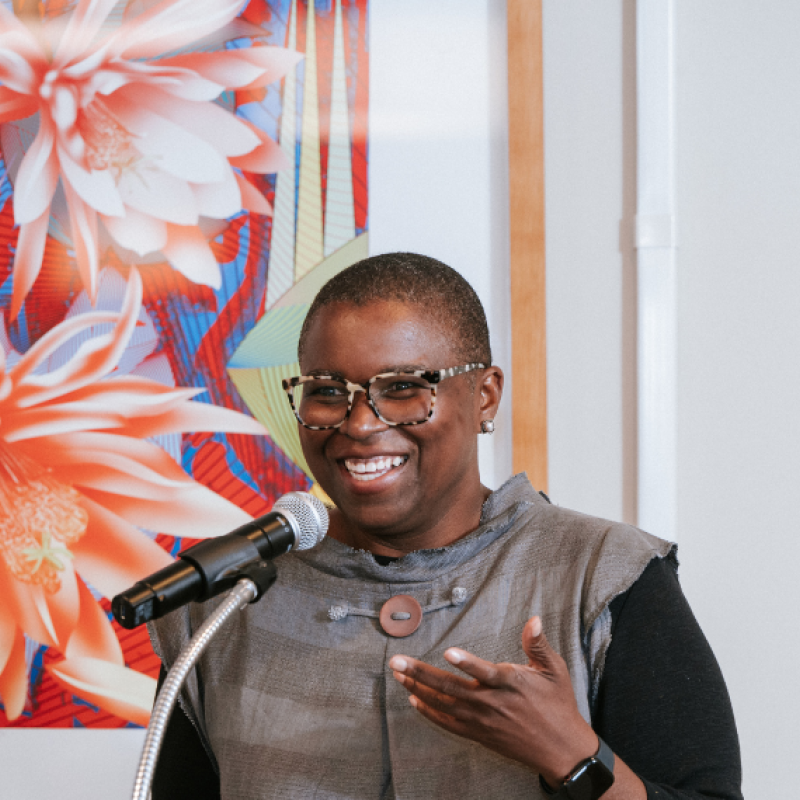
Cheryl Aguilar, Ph.D. ’25, shared research findings from her dissertation, "What About the Parents? Exploring the Impact of Immigration Family Separation and Reunification on the Well-being and Sense of Self of Central American Parents: An Interpretive Phenomenological Study". Her SSWR presentation drew from her dissertation work, and was titled, “Physically Separated, Psychically Connected: Central American Parents' Strength, Identity, and Connection across Migration”. Focused on the gap in research on the mental health of parents who are impacted by immigration-related family separation, which can cause PTSD and a heightened risk of anxiety and depression, Aguilar dove into how separation impacts Central American parents’ sense of self and bio-psycho-social-spiritual well-being.
One of her pivotal research findings, captured in the theme Siempre Ahí / Always There, highlights the relentless efforts parents make to remain emotionally and relationally connected to their children despite physical distance. Parents continued to parent across borders, which helped sustain the parent–child bond and mitigate some of the harms of separation.
“A key finding reveals that parents may experience being physically separated but psychically connected to their children, sustaining a strong sense of relational closeness. The separation and reunification phase presents a mix of challenges and opportunities that significantly affect parents’ mental health and the capacity to nurture, provide, and reconnect with their children. Key to navigating these moments are parents’ internal strengths, resourcefulness in sustaining family connections across borders, connecting with others with similar experiences and spirituality as a source of emotional grounding and hope.”

Aguilar’s research shows that the psychological impact of separation needs community-informed, culturally-responsive, and trauma-informed approaches that focus on parents as individuals. She found that empathetic attunement from friends, family and community members to parental distress can be an important for support, processing, and collective healing, and that more research is needed on the long-term impact and implications for parents and therefore the family's mental health as well.
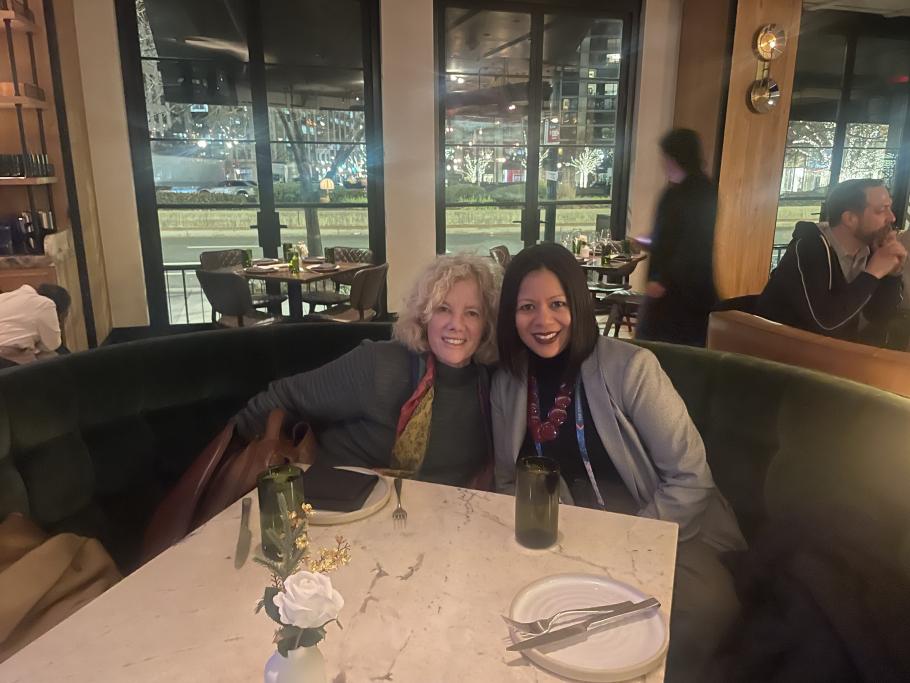
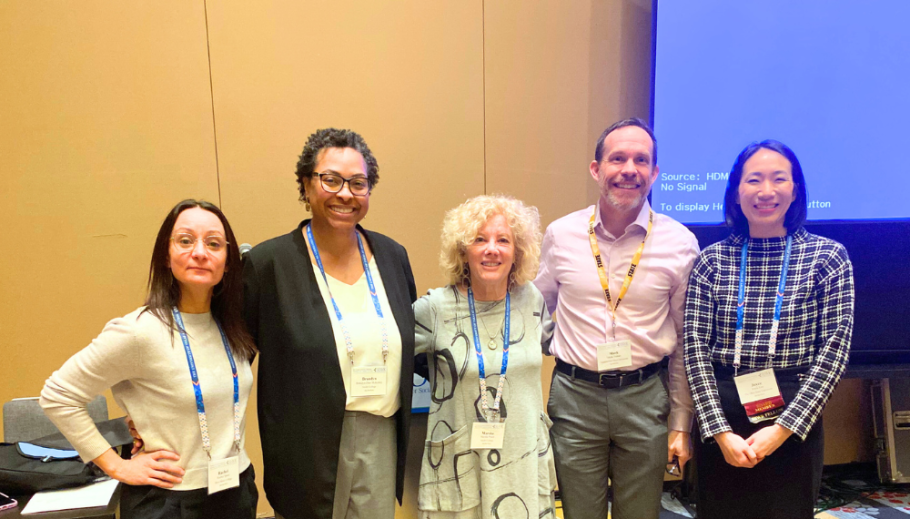
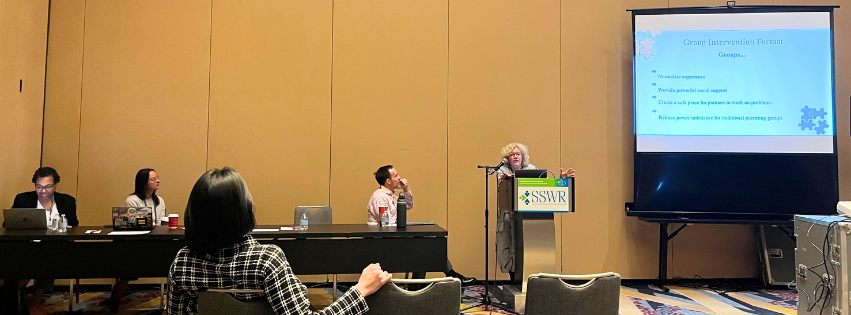
Marsha Kline Pruett, Maconda Brown O'Connor professor, and Brandyn McKinley, assistant professor, contributed to a symposium on how fatherhood plays a critical role in child development and family dynamics. Centered on under-explored mental health challenges faced by fathers, especially from marginalized backgrounds, the papers emphasized mental health in father-child relationships and healthy coparenting with an aim to inform supportive actionable interventions for fathers, promote positive child development and strengthen family dynamics.
"A key finding reveals that parents may experience being physically separated but psychically connected to their children, sustaining a strong sense of relational closeness." —Cheryl Aguilar, Ph.D. '25
Kline Pruett presented her paper, “A Dyadic Approach to Understanding Coparenting Relationships”, which explores how the quality of coparenting relationships plays a key role in paternal involvement and overall family well-being, using the Coparenting Across Family Structures Scale (CoPAFS) that she developed along with Michael Saini at the University of Toronto. It measures five constructs: value, respect, animosity, communication, and trust.
Her findings show that the perception a parent has of their coparenting relationship, especially feelings of animosity, impact that parent’s experience more than it affects their coparent’s impression of the relationship. “Patterns of partner effects varied: mothers’ trust and valuing of the father were associated with higher paternal CoPAFS scores, while fathers’ respect toward mothers was linked to maternal scores.” She found that trust best predicted mothers’ perceptions of coparenting quality (74.6%), while for fathers, animosity was the strongest predictor (74.1%) of their perception of coparenting.
“These findings highlight that a parent’s own perception of the coparenting relationship—particularly feelings of animosity—has a stronger influence on their overall experience than their partner’s perceptions. This suggests that improving coparenting quality may require more than encouraging mutual cooperation; it involves addressing internalized experiences of trust, value, and respect. Interventions may be most effective when they account for gender-specific dynamics and actively foster mutual trust and respect in coparenting relationships.”
The other papers that were part of the fatherhood symposium were: “The Impact of Undermining Coparenting on the Mental and Physical Health Outcomes of Black Fathers: The Role of Depression and Restrictive Emotionality”, by Brianna Lemmons, Ph.D., Baylor University; “Father Closeness As a Mediator of Paternal Mental Health (Depression and Anxiety) and Paternal Warmth in a Diverse Sample”. by Mark Trahan, Ph.D., Appalachian State University and Rachel Speer, Ph.D., Bryn Mawr College; and “Predictors of Mental Health Problems Among Trump-Supporting Fathers”, by Joyce Lee, Ph.D., Ohio State University.
“These findings highlight that a parent’s own perception of the coparenting relationship—particularly feelings of animosity—has a stronger influence on their overall experience than their partner’s perceptions." —Marsha Kline Pruett
As the discussant of this paper symposium, McKinley spoke at the end of the presentations, and drawing on her expertise in family science, synthesized and integrated the findings, identifying key ideas and future research directions in the area of fatherhood studies. McKinley also highlighted how the presenters' application of social justice principles to the interpretation of their research findings provided further evidence for the important insights gained from using an asset-oriented analytical approach in quantitative and mixed methods social work research.
Informed by her own scholarship on the motherhood/parenthood experiences and holistic wellness (i.e. social, emotional, relational, and economic well-being) of racially and ethnically diverse families, McKinley concluded her remarks with a reflection on the significance of all the contributions in advancing culturally-responsive programming and equity-centered family interventions.