Lafayette Slaydon chose the School for Social Work for a lot of reasons, after a search that began well before graduating from Indiana University Indianapolis with a B.S.W. in May.
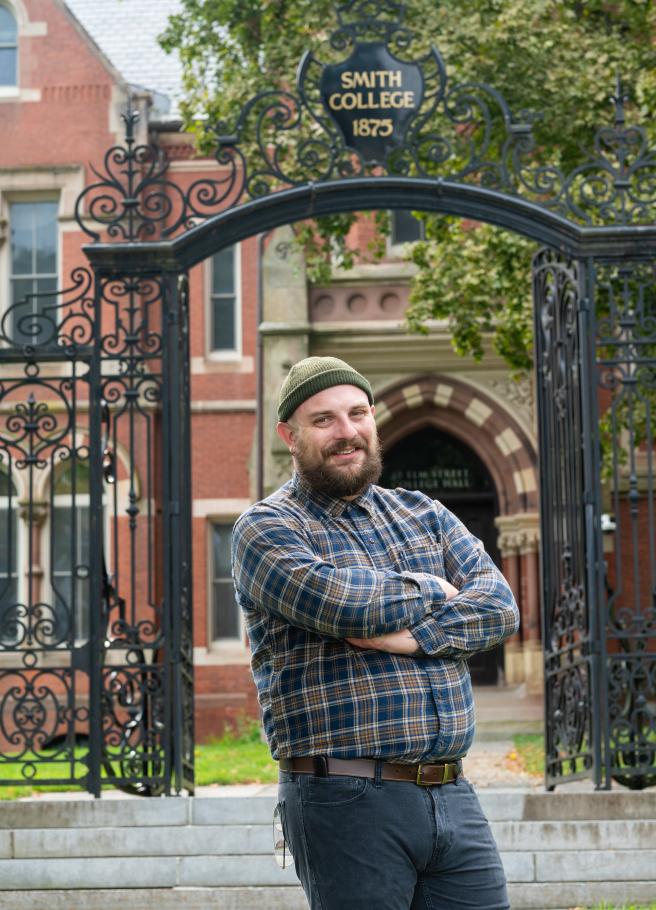
“I’d been hunting for two years to find the right clinical social work program,” they said. “I had spread sheets. I had filters. I was looking for programs in blue states, ones that reflected my values—and being near the water was on the list, too.” Being trans, they also wanted to be sure to land somewhere safe and welcoming.
It was their partner who first suggested SSW. Then Dr. Katie McCarthy, Ph.D. ’17, an IU School of Social Work professor and SSW alum, learned that Slaydon was interested in Smith. They recalled, “She was so excited to talk about it.”
Slaydon got excited, too: “SSW checked every single box.”
Upon admission, they received the Dean’s Award for Social Justice, a merit scholarship awarded for “extensive experience that demonstrates an extraordinary capacity and commitment to serve communities of color and social justice.” Slaydon certainly met the award’s criterion, having worked for several social justice–oriented organizations, including the Bail Project and a nonprofit fighting homelessness. During the pandemic, at Queering Indy, they co-organized a food pantry that served thousands.
“Coming to Smith, I was looking forward to being on a campus, part of a community,” they said. Slaydon described last summer as “invigorating”—but not without its challenges.
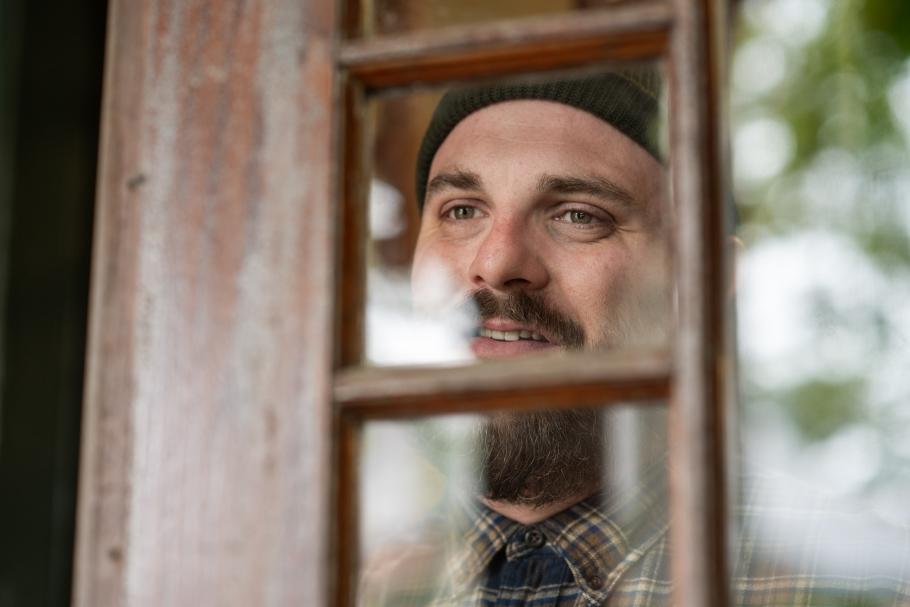
“I was with people who knew more than me. I wasn’t feeling fully on top of things. The language of the ivory tower, it’s a different language from what I knew. But by the end of the semester, with the support of my professors and my colleagues, I felt I was able to do it.
“I also didn’t anticipate, wasn’t ready for the emotional demands,” they said. “I needed to look inward both academically and personally—look for those places where one can grow. It was difficult, pulling out the most vulnerable parts of me, putting them under a microscope in front of a class of thirty people. But the experience changed my view of myself, and systems, and the world.”
Born in Louisiana, Slaydon grew up in a small Indiana farming community. Comparing it to the heartland, they said with a smile, “Western Massachusetts has less corn and more cows.” And unlike their home state (and 26 others), the Bay State has not banned gender-affirming health care for transgender minors.
"I think the more systems isolate us, the more hunger there is for connection. I want to work on creating systems that build dense connections, social communities."
Slaydon’s current placement at an independent, nonprofit trans health center in Northampton couldn’t be a better fit for them. “It’s the only one in the country exclusively serving transgender and gender-diverse communities,” they said. “I’m getting supervision and support from a team of supervisors dedicated to the learning experience.”
Slaydon is passionate about gender-affirming care. “How do we create and deliver a sustainable health system for transgender people, especially in rural zip codes? In places like the Midwest, health care providers are leaving—escaping—and that means people get left behind: the financially insecure, the housing insecure, the most vulnerable.
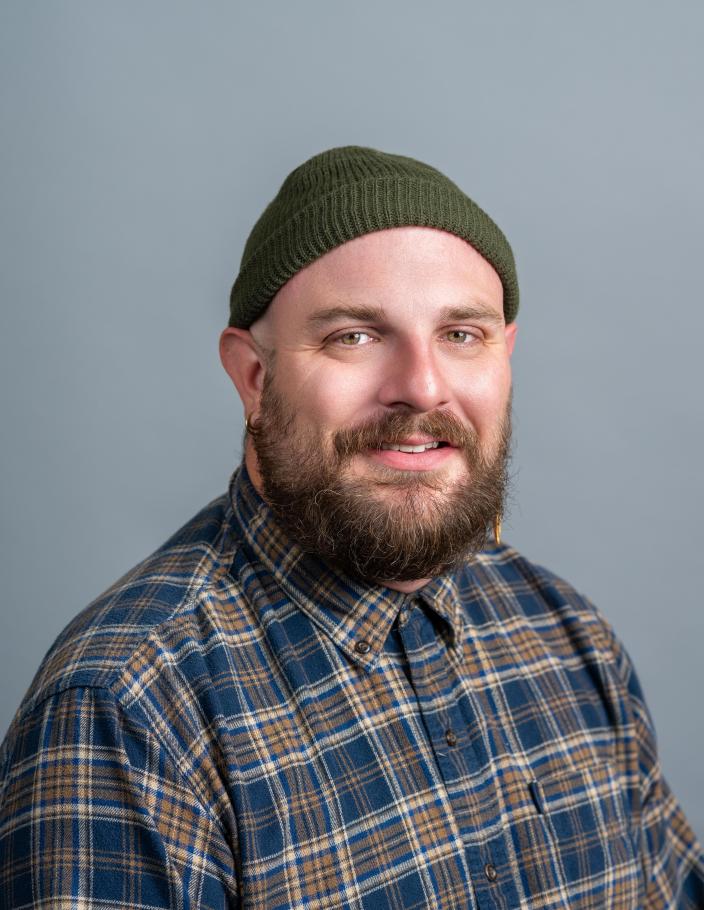
“Establishment health care tells us we’re responsible for our own health; it’s not about what we owe to each other. That kind of thinking corrupts everything. People say the systems are broken, but I think they’re working precisely the way capitalism, white supremacy want them to. And I think the more systems isolate us, the more hunger there is for connection. I want to work on creating systems that build dense connections, social communities.”
Because of their B.S.W., Slaydon was admitted to SSW with advanced standing and will graduate in 2026. After graduation, they will continue to pursue their passion for building social communities, while being realistic about the risk of burnout, a common side effect of social work. “Having cut my teeth in public mental health,” they said, “I’d like to work at an outpatient private practice. I’ve come to the conclusion that I’m someone who works to live, not lives to work. Knowing that will make me a better clinician and allow me to be more a part of my community.”
“And,” they added, “I hope to stay in New England. I love it.”