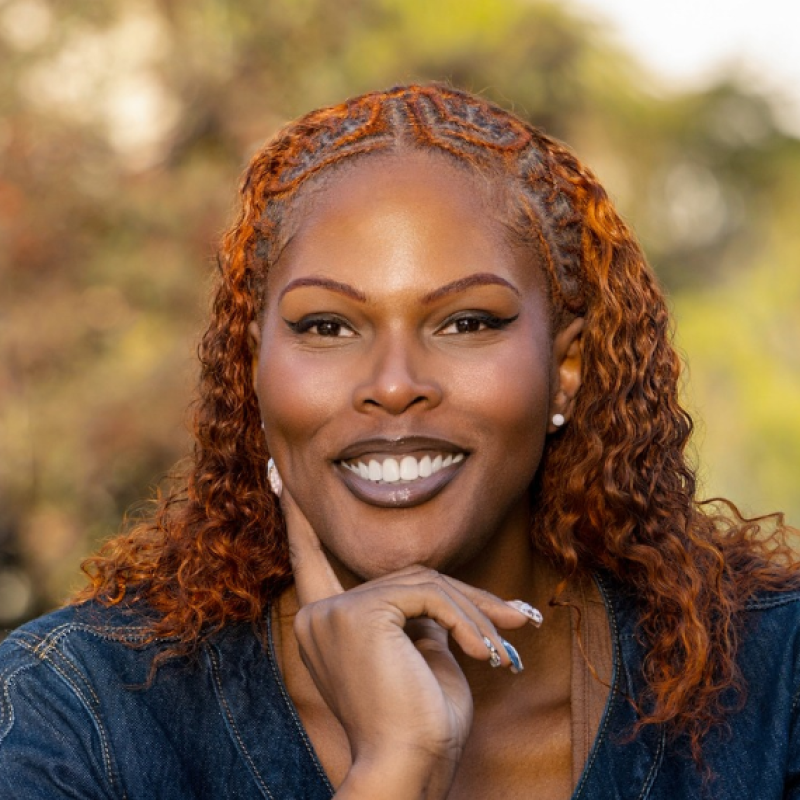
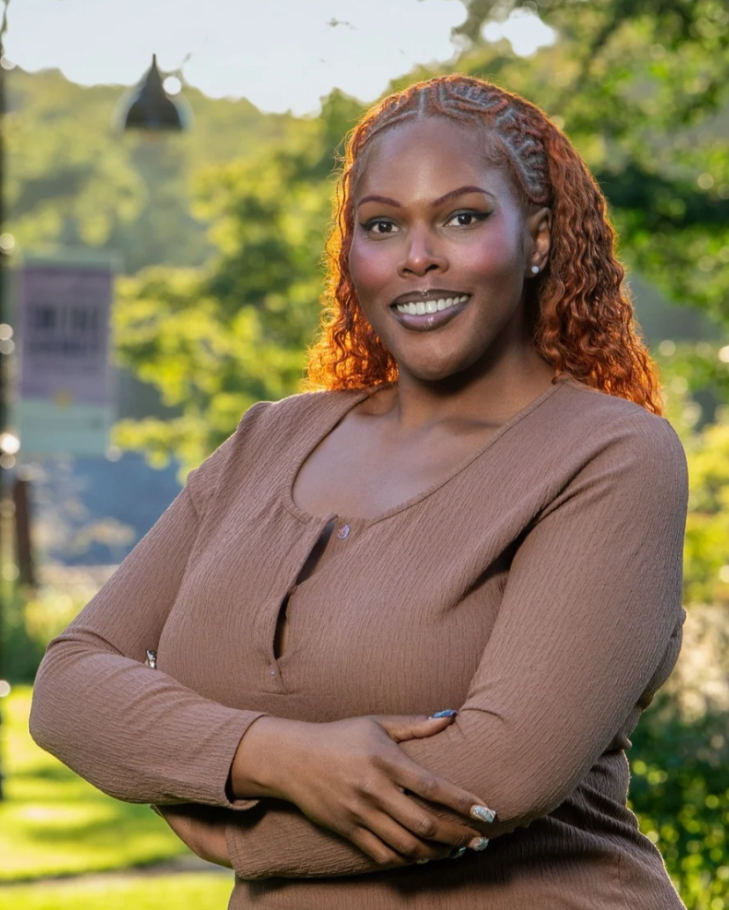
Well before she entered Smith College School for Social Work, first-year M.S.W. student Mercédes Loving-Manley had been deeply involved in the work of supporting marginalized people and community organizing.
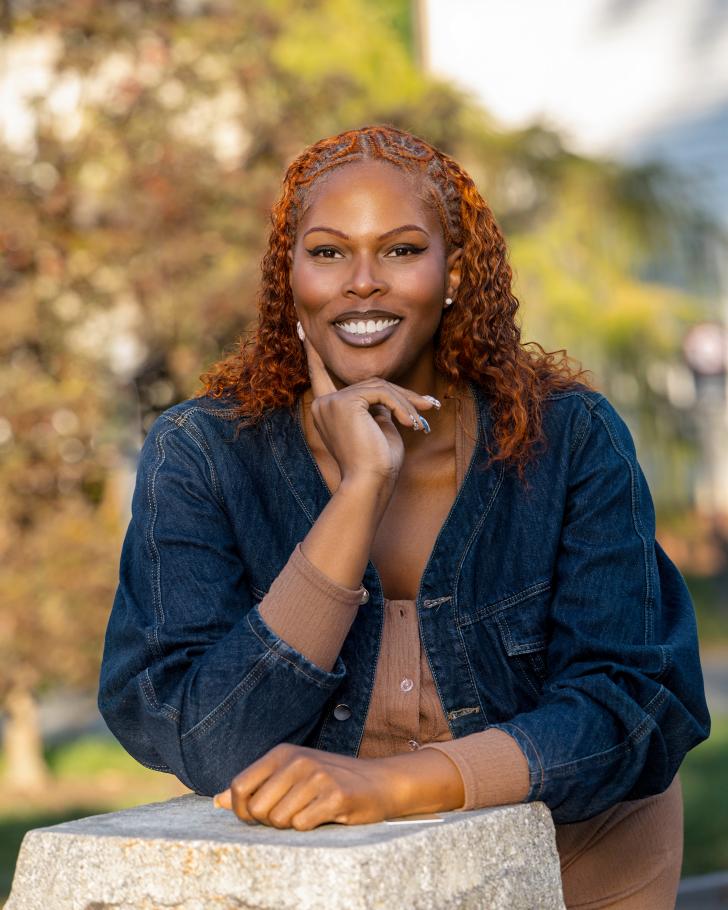
“I come from a grassroots community organizing tradition,” she explained. “I'm also a creative writer and a storyteller, so a lot of my work is very passion-driven, emotion-driven. It’s community-driven and community-rooted.”
In addition to a variety of roles in multicultural, LGBTQ+, and gender justice organizations, she is the founder and executive director of PrideXtended, Inc., a non-profit that centers “the wellbeing of Black LGBTQ+ individuals with heightened urgency on Black Transgender populations.”
Yet she didn’t always have a positive view of social work.
“I was always super critical,” Loving-Manley said. “I felt for a long while that social workers played a part in the criminalization of Black people, of trans people, and of poor folks. That affected my lens.”
“I come from a grassroots community organizing tradition. I'm also a creative writer and a storyteller, so a lot of my work is very passion-driven, emotion-driven. It’s community-driven and community-rooted.”
That changed when she got a job as a trans engagement coordinator at Safe Passage, a Northampton organization that serves survivors of domestic violence.
“There, I met all these folks who hold social work degrees and clinical social work licenses, and they were really, really decent people,” said Loving-Manley. “They also were similar to me in that they were really big on meeting people where they are. I was meeting people who were genuine in their social work practice and that encouraged me to say I can do this and I should do this.”
As a graduate of Hampshire College, Loving-Manley had the opportunity to apply to SSW through the Five College Circle of Scholars program. The unconventional structure of SSW was appealing, since she felt that Hampshire’s non-traditional structure had served her well.
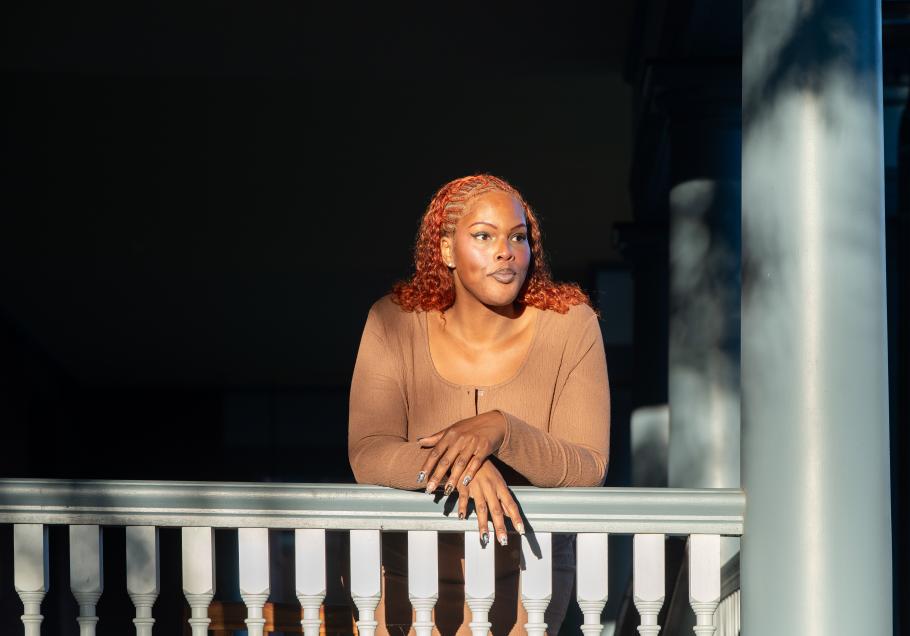
Loving-Manley was assigned to an internship at the same organization where she works. However, the two positions are distinct. While her job involves outreach and engagement with trans populations, her internship gives her the opportunity to provide direct service counseling under the supervision of an experienced social worker. With the two positions, she also finds that she can be a helpful bridge between two departments that often have overlap.
“It feels really good to be able to just expand upon the work that I'm already doing,” said Loving-Manley. “I can meet people where they are and be able to practice applying psychoeducation to everything that I'm doing.”
“I want to explore storytelling as a therapeutic practice for Black folks, queer folks, trans folks. I want to be able to bring that home to folks that I'm in community with, and be able to make these experiences accessible and reachable for people.”
As someone who is working full-time and also runs a non-profit, the structure of the program has been helpful.
“People talk about how rigorous the program is,” Loving-Manley said. “A big part of that rigor is that we’re doing ten classes in ten weeks. And I admire a lot of the scholarship there.”
Because she lives in the area, Loving-Manley doesn’t live on campus and didn’t participate in many campus activities during her first summer. While being a commuter means she misses out on some opportunities for connection with her cohort, it also has had benefits.
“For me, I'm coming into this space already having community and connection and, to be honest, I'm not looking for that. I’m able to come here and have tunnel vision. I’m able to come here to do my job [as a student].”
“I see so many different dynamic examples of social work practice. I think it’s so beautiful! I want to be able to leverage the resources, the connections, the community network expansion, to be able to meet people where they are and make healing possible."
Still, she has connected with peers in her classes and made time to be involved with student-led groups that are important to her.
After graduation, Loving-Manley wants to continue to serve communities she cares about in a variety of ways.
“My dream is to be able to offer therapeutic services through my non-profit PrideXtended,” she said. “I also want to explore what private practice formats might look like as an interdisciplinary artist and community curator. I want to explore storytelling as a therapeutic practice for Black folks, queer folks, trans folks. I want to be able to bring that home to folks that I'm in community with, and be able to make these experiences accessible and reachable for people.”
“I see so many different dynamic examples of social work practice,” Loving-Manley said. “I think it’s so beautiful! I want to be able to leverage the resources, the connections, the community network expansion, to be able to meet people where they are and make healing possible.”